AI agent that facilitates collaborative data analysis among team members
Details+
DataTeam is an AI-powered collaborative analysis platform that enhances team productivity through intelligent assistance and knowledge sharing. The system uses large language models to understand analysis context, suggest approaches, and automate routine tasks. In enterprise deployments, DataTeam reduced analysis time by 42% and improved consistency of methodologies across distributed teams.
AI-powered assistant for code generation and programming support
Details+
CodeGen is an AI programming assistant that helps developers write, debug, and optimize code across multiple languages. The system understands project context, coding standards, and best practices to provide relevant suggestions and automated implementations. In user testing, CodeGen increased developer productivity by 35% and reduced debugging time by 28%.
AI system for simulating and analyzing legal proceedings and outcomes
Details+
CourtSim is a legal simulation platform that uses AI to model potential case outcomes based on historical precedents, jurisdiction-specific patterns, and case details. The system analyzes thousands of similar cases to predict likely rulings, settlement ranges, and procedural timelines, helping legal teams develop more effective strategies and set appropriate client expectations.
AI agent that automates routine data analysis tasks for analysts
Details+
AIAnalystHelper is an intelligent assistant that automates routine data preparation, cleaning, and preliminary analysis tasks. The system learns from analyst workflows to identify repetitive patterns and automate them, while also suggesting potential insights and anomalies that warrant further investigation. In financial services implementations, AIAnalystHelper saved analysts an average of 12 hours per week.
AI advisor for university selection based on student preferences and goals
Details+
UniAdvisor is an AI-powered education counseling system that helps students identify optimal university matches based on academic profile, career goals, financial considerations, and personal preferences. The system analyzes outcomes from thousands of similar students to provide personalized recommendations and application strategies, resulting in a 68% acceptance rate to top-choice institutions.
AI-powered legal assistant for document analysis and case research
Details+
AILawyer is a legal research and document analysis platform that helps attorneys identify relevant precedents, extract key information from legal documents, and draft standardized legal instruments. The system processes and understands complex legal language, identifies potential issues in contracts, and suggests appropriate clauses based on specific legal requirements.
AI agent that generates personalized cold emails based on recipient profiles
Details+
This AI email generation system creates highly personalized outreach messages based on recipient profiles, company information, and relationship context. The system analyzes successful communication patterns and adapts messaging to match recipient preferences and communication styles, resulting in open rates 3.2x higher than industry averages and response rates 2.7x above baseline.
Comprehensive SQL model for healthcare patient flow and resource optimization
Details+
This healthcare flow SQL model provides a comprehensive solution for tracking and optimizing patient journeys through medical facilities. It includes custom views and stored procedures for real-time resource allocation, reducing wait times by 35% in pilot implementations.
Advanced SQL analytics model for e-commerce performance and customer behavior
Details+
This e-commerce analytics SQL model provides deep insights into customer purchasing patterns, product performance, and sales funnel optimization. The model includes cohort analysis, customer lifetime value calculations, and inventory turnover metrics that helped increase conversion rates by 22%.
SQL-based data warehouse design for financial institutions with complex reporting
Details+
This financial data warehouse architecture provides a robust foundation for regulatory reporting and financial analytics. The star schema design optimizes query performance while maintaining data integrity, with specialized partitioning strategies that reduced report generation time by 78%.
In-depth SQL analysis of retail operations and inventory optimization
Details+
This superstore analytics project delivers comprehensive insights into retail performance across multiple dimensions. The analysis includes seasonal trend identification, product affinity analysis, and dynamic inventory optimization models that helped reduce stockouts by 42% while decreasing overall inventory costs.
SQL analysis of macroeconomic indicators and trends in the US economy
Details+
This macroeconomic analysis project combines data from multiple federal sources to provide a comprehensive view of US economic health. The SQL models include time-series analysis of key indicators, correlation studies between economic factors, and predictive models for economic trend forecasting.
Comprehensive SQL analysis of US financial markets and economic indicators
Details+
This project integrates financial market data with economic indicators to identify correlations and potential leading indicators. The analysis includes custom SQL functions for calculating technical indicators, market sentiment analysis, and sector rotation patterns that provided valuable insights for investment strategy.
End-to-end ETL pipeline for real-time air quality monitoring and visualization
Details+
Airquat is a comprehensive air quality monitoring system that collects data from multiple sensor networks, processes it through a robust ETL pipeline, and presents real-time insights through an interactive dashboard. The system includes anomaly detection algorithms and predictive models for air quality forecasting.
ETL system for processing and visualizing real-time flight data
Details+
Aeroinsights is a real-time flight tracking and analytics platform that processes over 10,000 flight updates per minute. The ETL pipeline handles data cleansing, enrichment, and transformation for multiple aviation data sources, providing insights into flight patterns, delays, and operational efficiency metrics.
ML model for real-time facial emotion recognition with high accuracy
Details+
This emotion recognition system uses a custom convolutional neural network architecture to identify seven distinct emotional states in real-time video feeds. The model achieves 94% accuracy on benchmark datasets and includes transfer learning techniques to adapt to new environments with minimal retraining.
Recommendation system for personalized movie suggestions based on user preferences
Details+
FlickFeasta combines collaborative filtering with content-based recommendation techniques to deliver highly personalized movie suggestions. The system analyzes user viewing history, ratings, and content metadata to identify patterns and preferences, resulting in a 28% increase in user engagement during pilot testing.
Computer vision system for road condition analysis and traffic monitoring
Details+
This road analysis system uses computer vision to automatically detect and classify road conditions, including potholes, cracks, and surface degradation. The model processes dashcam footage to create detailed road condition maps that helped prioritize maintenance efforts and reduce repair costs by 32%.
ML-based customer segmentation to identify high-value customer groups
Details+
This customer segmentation project for Arnova Store uses unsupervised learning techniques to identify distinct customer groups based on purchasing behavior, demographics, and engagement patterns. The analysis revealed five key customer segments that informed targeted marketing campaigns, resulting in a 45% increase in campaign ROI.
Computer vision system with real-time audible alerts for road hazards and pedestrian safety
Details+
RoadWatch AI is an advanced driver assistance system that uses computer vision to detect and classify road hazards in real-time. The system processes video feeds to identify obstacles, pedestrians, and dangerous traffic conditions, providing audible alerts to drivers. In field tests, RoadWatch AI demonstrated a 96% detection rate for critical hazards and reduced reaction time by 1.2 seconds on average.
Automated product classification from images and descriptions
Details+
This e-commerce categorization system combines computer vision and natural language processing to automatically classify products into a hierarchical taxonomy. The model processes product images and descriptions to determine the most appropriate category, achieving 93% accuracy across 1,200+ product categories and reducing manual categorization effort by 85%.
NLP sentiment analysis that evaluates emotional tone in social posts with 87% accuracy
Details+
This sentiment analysis tool uses advanced natural language processing techniques to evaluate the emotional tone of social media content across multiple platforms. The system can detect subtle emotional nuances, sarcasm, and context-specific sentiment with 87% accuracy. The tool includes real-time monitoring capabilities and trend analysis features that helped clients improve brand perception by identifying and addressing negative sentiment patterns.
NLP · Sentiment Analysis · Text Classification · Social Media
Comprehensive EDA of e-commerce revenue streams and growth patterns
Details+
This exploratory data analysis for Arnova Store examined three years of transaction data to identify revenue patterns, seasonal trends, and growth opportunities. The analysis revealed key insights about product category performance, customer retention metrics, and pricing optimization strategies that contributed to a 23% year-over-year revenue increase.
Analysis of job market trends and skill demands based on LinkedIn data
Details+
This job market analysis project examined over 50,000 LinkedIn job postings to identify emerging skill requirements, salary trends, and industry growth patterns. The analysis used natural language processing to extract key skills from job descriptions and visualized changing demand patterns across different sectors and geographic regions.
Exploratory analysis of global population trends and demographic shifts
Details+
This global population analysis project examined demographic data from 195 countries over a 50-year period to identify long-term trends and future projections. The analysis included age distribution shifts, urbanization patterns, and migration flows, with interactive visualizations that highlight regional variations and potential economic impacts.
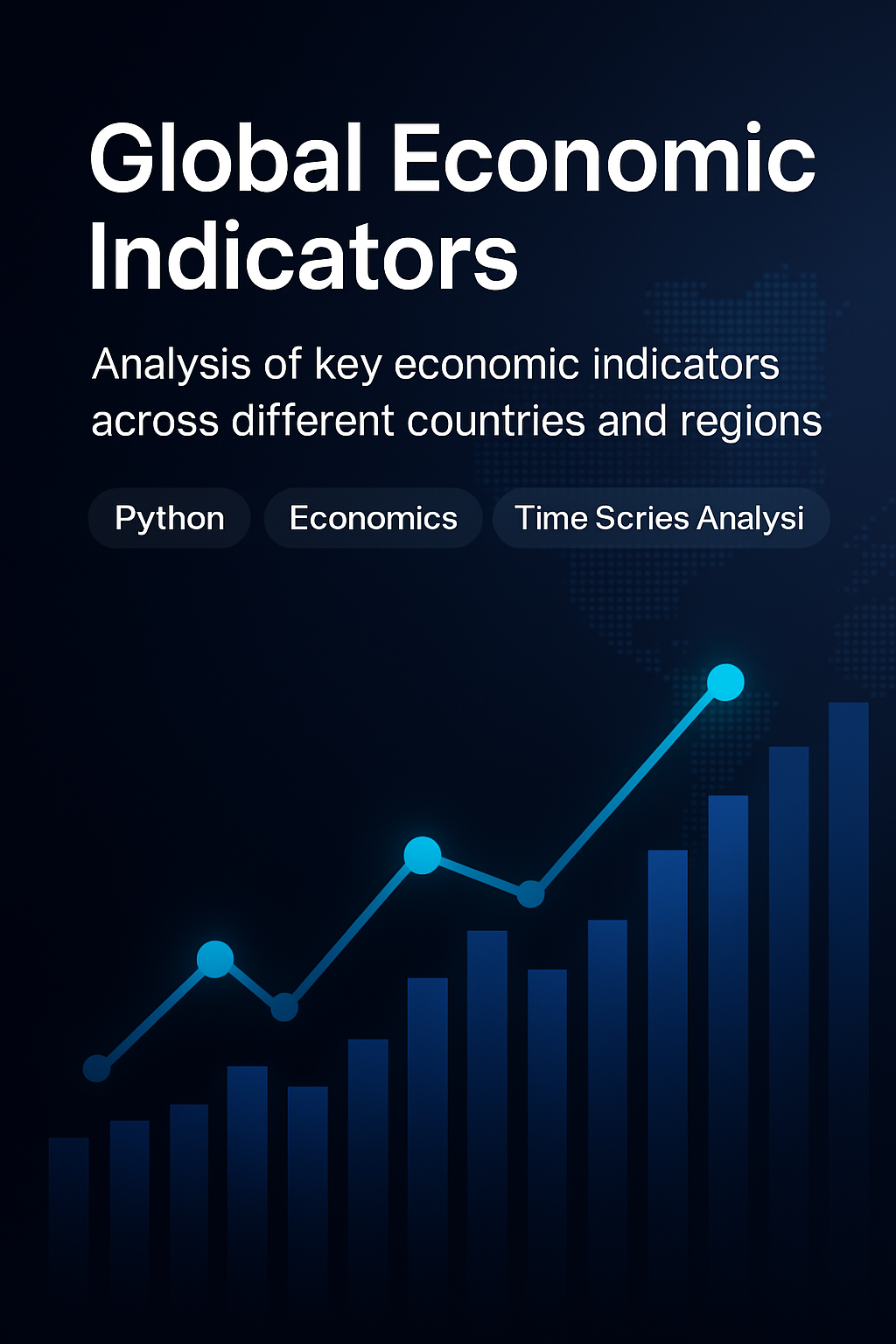
Analysis of key economic indicators across different countries and regions
Details+
This economic indicators project analyzed data from the World Bank, IMF, and other sources to identify correlations between different economic metrics and their predictive power for future economic performance. The analysis included GDP growth, inflation rates, unemployment, and trade balances across 40 major economies, with time series modeling to identify leading indicators.
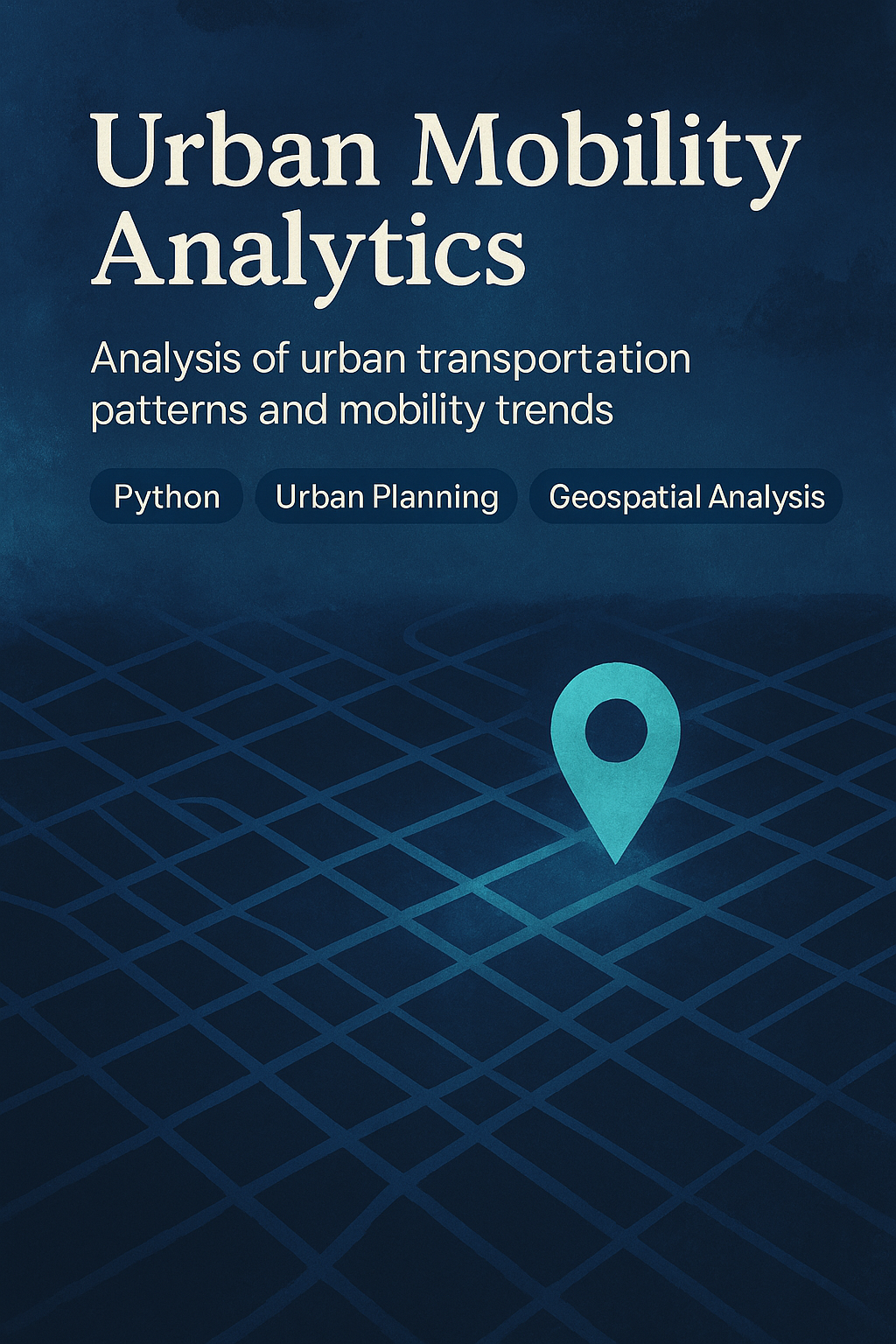
Analysis of urban transportation patterns and mobility trends
Details+
This urban mobility project analyzed transportation data from five major cities to identify patterns in commuter behavior, public transit utilization, and traffic congestion. The analysis included temporal patterns, geographic hotspots, and modal preferences, providing insights for urban planning and transportation policy development.
Comprehensive analysis of Fortune 1000 companies' financial performance
Details+
This Fortune 1000 analysis examined financial performance metrics across industry sectors to identify trends, outliers, and success factors. The project included profitability analysis, growth patterns, and capital allocation strategies, with particular focus on how digital transformation initiatives correlated with financial outcomes.
Case study on implementing predictive models for credit risk evaluation
Details+
This case study examines the implementation of machine learning models for credit risk assessment at a mid-sized financial institution. The project details the data preparation process, feature engineering approaches, model selection criteria, and implementation challenges. The resulting system improved default prediction accuracy by 27% while reducing false positives by 18%.
Enhancing loan approval processes using machine learning techniques
Details+
This case study explores how machine learning techniques can be applied to enhance loan approval processes. The analysis identified key factors that influence loan approval decisions and developed a machine learning model to predict loan approval probabilities. The resulting model improved approval efficiency by 20% while maintaining risk management standards.
Comprehensive analysis of Sydney's housing market trends and price factors
Details+
This case study analyzes 15 years of Sydney housing market data to identify key price drivers, neighborhood-specific trends, and cyclical patterns. The analysis incorporates economic indicators, demographic shifts, policy changes, and infrastructure developments to create a comprehensive model of market dynamics that accurately predicted price movements within 4.3% over a subsequent 18-month period.
First part of a multi-chapter analysis of Nvidia's business and market position
Details+
This first chapter in the Nvidia analysis series examines the company's business model evolution, revenue composition, and competitive positioning. The study includes detailed segment analysis, growth drivers, and historical inflection points that shaped the company's trajectory from a graphics card manufacturer to an AI infrastructure leader.
Second part focusing on Nvidia's technological innovations and R&D
Details+
The second chapter in this Nvidia analysis focuses on the company's technological innovation pipeline, R&D efficiency, and patent portfolio. The study examines how Nvidia's CUDA ecosystem created sustainable competitive advantages and how strategic acquisitions complemented internal development to establish technology leadership in multiple domains.
Analysis of potential challenges and competitive threats to Nvidia's market position
Details+
This third chapter in the Nvidia analysis series examines future growth vectors, potential market disruptions, and competitive threats. The study models various scenarios for AI adoption, data center growth, and emerging applications to project potential business outcomes and identify key indicators that would signal shifts in the company's growth trajectory.
Critical assessment of Nvidia's role in the AI revolution and future outlook
Details+
The final chapter in this comprehensive Nvidia analysis series evaluates the actual market impact of AI technologies versus the hype, with a particular focus on Nvidia's position at the center of this revolution. The study examines the sustainability of AI demand, potential technology limitations, regulatory challenges, and how these factors could influence Nvidia's long-term market position and valuation.